What are Clean Energy Transition Plans?
Clean Energy Transition (CET) strategy formulation involves projecting medium- to long-term energy demand and supply following transformation scenarios aligned with the expected socio-economic and technological developments of the city regions, as well as local and national energy and climate goals. Particular emphasis is placed on defining clean energy transition pathways.
The strategy reflects local and regional energy demand patterns across all sectors and considers renewable energy potentials and their optimal use to meet future demand. Alongside a Business-as-Usual (BAU) scenario—capturing historical trends and existing policies as a benchmark—CET scenarios are developed based on combined key decarbonization measures covering significant improvements in energy efficiency across all sectors, electrification of end-uses, a shift to clean fuels, and increased deployment of local RES to decarbonize power and heat supply.
Scenario development also accounts for current urban planning, land use, and their expected evolution within city boundaries and contexts. The visions and pathways formulated in this strategy, co-created with local stakeholders, must ultimately be translated into planning decisions embedded in governance frameworks, planning instruments, and co-create actions for implementation.
PLENTY-Life approach to the formulation of CET Strategies
Transitioning cities to carbon neutrality requires an integrated, cross-sectoral energy planning approach embedded in urban planning. The PLENTY-LIFE approach combines spatio-temporal energy-demand and supply analysis with advanced urban energy modeling tools to assess flexibility needs. It also provides a KPIs-based monitoring framework aligned with the UN-SDGs 7, 11, and 13.
At its core, the development of Clean Energy Transition (CET) strategies for cities and municipalities is based on an iterative, co-creation process. By engaging local stakeholders and citizens—through workshops, consultations, and surveys—this process guides the formulation of CET strategies through the following steps:
- Data Collection: Gather current energy balances by sector and fuel, assess RES potentials, and compile socio-economic and technological parameters influencing the city’s energy demand and supply.
- Base Year Calibration: Reconstruct and calibrate the base year energy demand and supply to establish a reference point for future projections.
- Scenario Development: Build BAU and CET scenarios through active engagement with key stakeholders.
- Energy Demand-Supply Modelling: Utilize established energy modelling framework within Plenty-Life (MAED-City, CEA, and MESSAGE), to model energy demand and supply, and extract pertinent results.
- Stakeholder Feedback: Refine scenarios to align with city energy and climate targets.
- Key Indicators for CET (KICET): Extract a set of indicators to monitor the progress and effectiveness of the CET strategy.
- Roadmap and Priority of Action: Define a transition roadmap with prioritized actions.
The PLENTY-LIFE approach -optimized to deliver Clean Energy Transition (CET) strategy- is data-driven, inclusive, and tailored to city-specific needs. This ensures higher effectiveness, stronger stakeholder acceptance, and enhanced ownership of the resulting CET strategy.
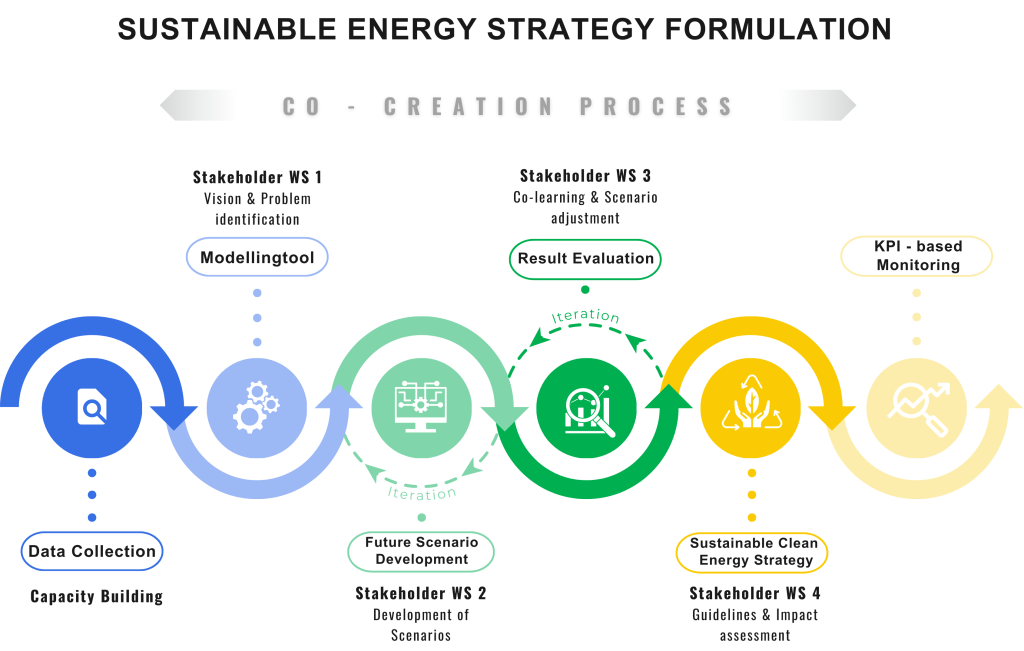
Fig.1: steps of CET Strategy formulation following PLENTY-LIFE approach
The stakeholder workshops, supported by capacity building material found in the PLENTY-Life website, aim to empower local stakeholders to actively participate in the co-creation process. They provide essential knowledge on the links between spatial planning and energy infrastructure, while also sharing early results from data collection and municipal profile development.
Using the collected data on current state of city profile and energy balance, the base year is reconstructed in the demand and supply models and calibrated. The following step deals with the co-design of future vision and construction of future socio-economic and technological development scenarios of the municipality following an intensive co-creation with local stakeholders. The aim is to identify potential and likely development trajectories for socio-economic and technological drivers that shape energy demand, supply, and spatial requirements.
Within PLENTY-Life, the modeling framework combines these future development pathways with the calibrated baseline profile and the municipality’s renewable energy potential to project useful and final energy demands and define the required local energy infrastructure. The integrated demand–supply scenarios are supported by the co-creation process established during the visioning workshops and guided by local, regional and national policy frameworks, such as decarbonization targets or renewable energy zoning.
Following the established feedback-loop, the results are presented and discussed with local stakeholders to receive their feedback for further improvement and refining of the scenarios‘ assumptions resulting in final approved CET strategy.
The application of planning instruments directly targeting energy supply infrastructure, such as heating and cooling grids, requires close involvement of local energy utility.
Finally, once the CET strategy is formulated and priority action plans are translated into local planning instruments, a KPI-based monitoring framework is established to track progress against the envisioned clean energy transition pathway
To find out more and see the results of PLENTY-Life pilots, click here.