Skip to content

Plan your local energy future

video-placeholder

The PLENTY-Life-Hub gives information on how you can enable your small or medium-sized municipality to manage the clean energy transition using the PLENTY-Life approach.

It introduces the HISEP approach, combining technical expertise with local participation, and offers guidance, examples and resources to support cities on their path to a sustainable, climate-neutral future.

The project

PLENTY-Life develops and institutionalises the HISEP methodology — a cross-sectoral planning approach that integrates energy systems with urban development. By building capacity in small and medium-sized cities, the project enables municipalities to prepare and monitor long-term strategies for the clean energy transition. With pilot cases across Europe, PLENTY-Life demonstrates how local authorities can co-create practical, science-based solutions to achieve climate neutrality by 2030 and 2050. The PLENTY-Life project is co-funded by the European Union via the LIFE programme.

The PLENTY-Life approach – HISEP

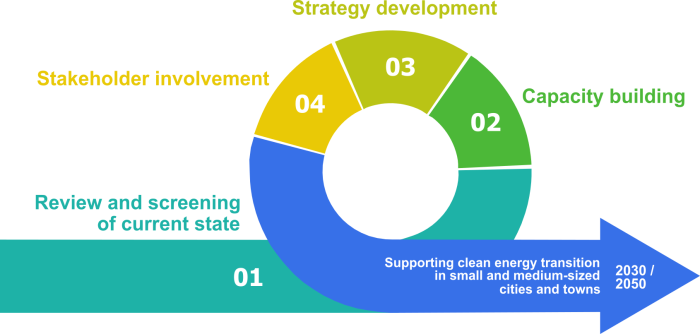
The PLENTY-Life approach follows a methodology of Holistic Integrated Spatial and Energy Planning (HISEP) which is based on four pillars:

  • Review and Screening of current state: Analysis of urban/spatial planning tools and local clean energy strategies
  • Capacity building: Build local expertise for developing clean energy transition strategies and plans
  • Strategy development: Pilot case studies demonstrating the integrated process of clean energy strategy preparation
  • Stakeholder involvement: Establishing a co-creation process to deliver sustainable clean energy transition strategies and plans

plenty-life-igc

These four pillars are not sequential, but rather iterative, having influence on each other.

Co-creation process, involving administration and civil society, needs and potentials, building on existing strategies and integrating energy system into municipal development plan.

Partners

PLENTY-Life was developed by a consortium of 11 partners from 5 countries. The 6 scientific partners contributed with their specific expertise, while the 5 regional partners were representing the 7 pilot municipalities in which the PLENTY-Life approach was implemented.