Why Involve Citizens in Decision-Making?
The PLENTY-Life project establishes an innovative methodology of stakeholder-based holistic integrated spatial and energy planning (HISEP). The methodology is fine-tuned in co-creation processes in pilots, empowering them to deliver and monitor their clean energy strategies. However, the knowledge needed to build scenarios comes from stakeholders across different sectors and governance levels. The engagement approach followed by PLENTY ensures that everyone is involved at the right time in the co-creation processes by building a framework with tools. Find more below.
The first step? Stakeholder Mapping
Stakeholder mapping involves identifying and analysing the various individuals, groups, or entities that have an interest, involvement, or influence in the co-creation activities.
The stakeholder matrix for PLENTY-Life intends to identify strategic stakeholders (mainly at the municipality and region level) to be involved in the process of creating long-term energy and climate strategies for the pilot municipalities. These include Public Authorities, Regulatory Bodies, Energy Suppliers, DSOs, ESCOs, Funding Agencies, Social Institutions/Associations, Commerce Associations, and Local Businesses. Additionally, it fosters a deeper understanding of stakeholders and their roles, ensuring the establishment of effective collaboration methods for project success.
Follow these 5 steps in your Stakeholder Mapping:
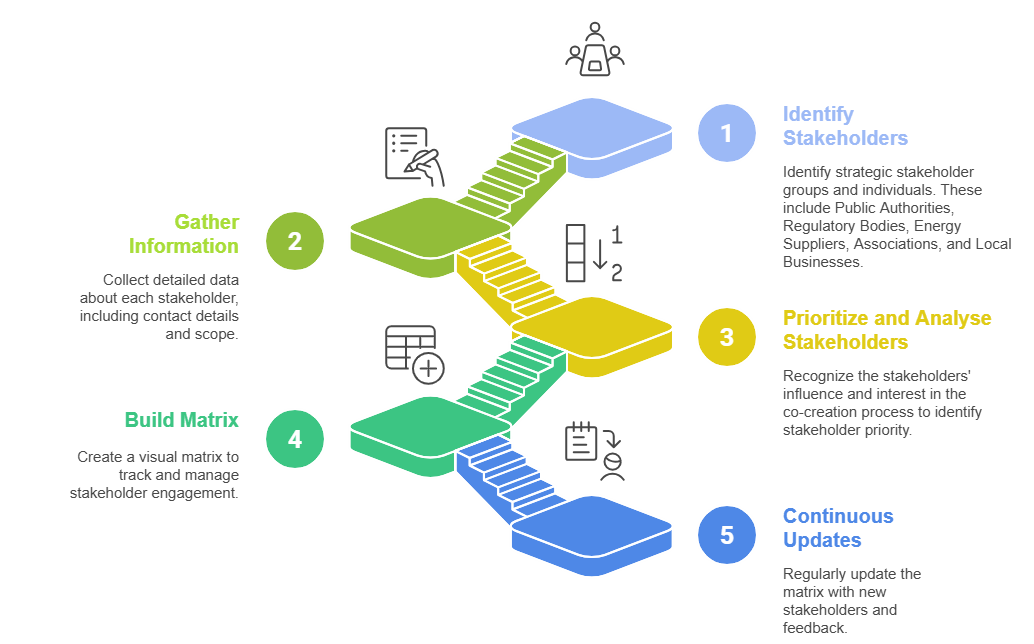
1. Identify Stakeholders
Recognize which stakeholder groups you want to involve in the strategic planning.
Think about including:
- Public Authorities
- Regulatory Bodies
- Energy Suppliers
- DSOs
- ESCOs
- Funding Agencies
- Social Institutions/Associations
- Commerce Associations
- Local Businesses.
Public Authorities: Government bodies at local, regional, and national levels responsible for energy and urban policy, permitting, standards, and sustainability programs.
Regulatory Bodies: Agencies that enforce energy and urban planning regulations, including safety, environmental, zoning, and building codes.
ESCOs: Specialists in energy efficiency solutions, offering audits, upgrades, and maintenance of energy systems.
Energy Suppliers: Companies providing electricity, gas, and other energy resources to consumers and businesses.
Energy Suppliers: Companies providing electricity, gas, and other energy resources to consumers and businesses.
Social institution/association: NGOs, advocacy groups, and community organizations that promote public engagement and support clean energy initiatives.
Commerce association and local businesses: Economic actors driving innovation and regional development with potential impact on energy and urban planning.
2. Gather Information
Collect data on each stakeholder category. Go through existing databases and understand their roles, interests, and potential contributions to the clean energy transition scenario’s design.
Stakeholder Identification:
- Name
- Scope
- Description
- Strengths
- Observations
Stakeholder Contact:
- Contact Name
- Position
- Contact
3. Prioritize and Analyse Stakeholder
Focus engagement efforts on key stakeholders.
Identified Stakeholder Priority:
- Influence (Low, Medium, High)
- Why?
- Interest
4. Build Matrix
A stakeholder matrix can help in categorizing stakeholders and ensures efforts are focused throughout the lifetime of the project.
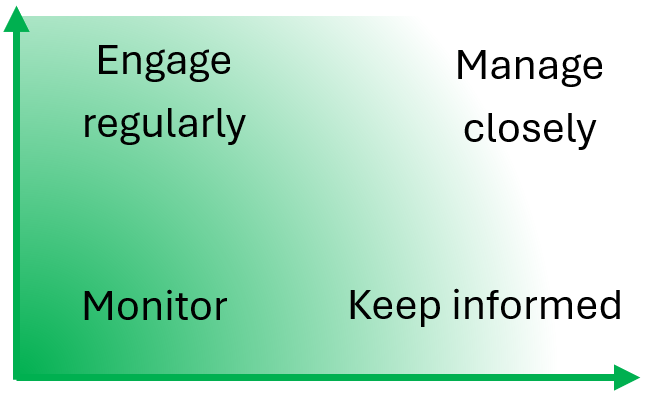
Through this dynamic process, continue to adjust your stakeholder engagement process based on experience and feedback.
Once you’ve mapped stakeholders based on their interest in the project and their influence over the designing process, use the matrix to guide your engagement strategy:
- High Influence, High Interest: Manage Closely, with frequent engagement and active participation and personalized communication.
- High Influence, Low Interest: Keep Informed, with periodic updates and consultation on key decisions.
- Low Influence, High Interest: Engage Regularly, by inviting to workshops and feedback sessions.
5. Continuous Updates
Building an engagement framework
Tailor communication to each stakeholder. Think about how you characterize the population in your region, what the expected barriers you will encounter are, and how to overcome them. To learn more about the engagement strategy and co-creation processes visit: WORKSHOP