Capacity Building Programme
Module 3 – Integrated Spatial and Energy Planning
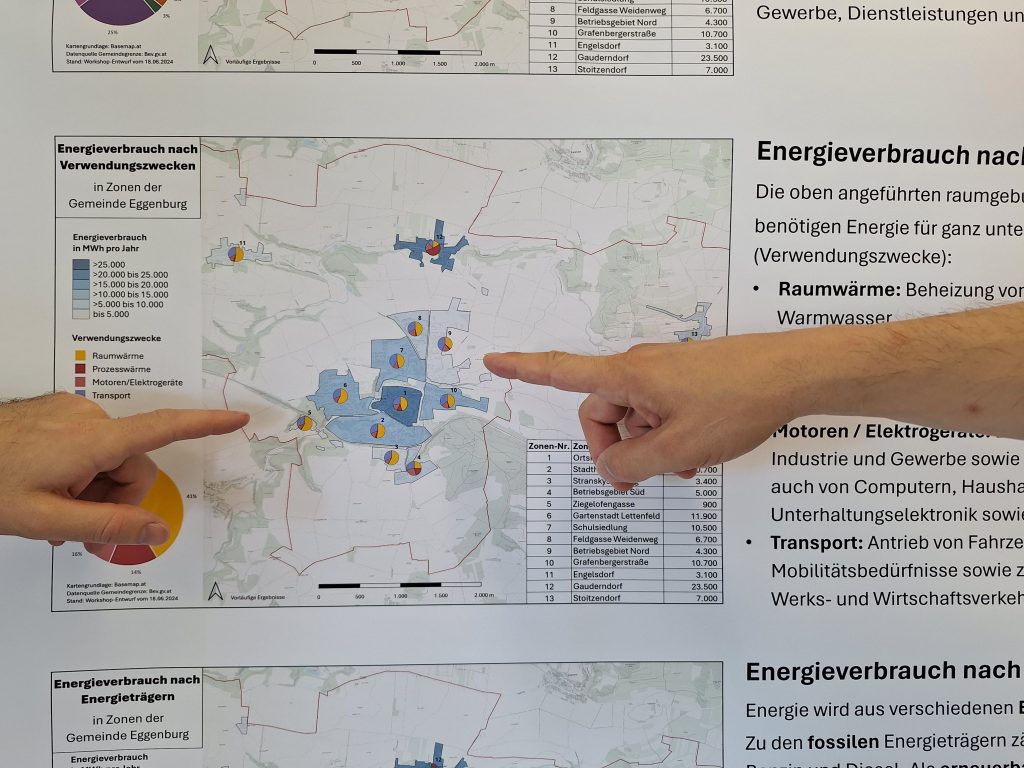
Where we live, work, do shopping, relax, educate ourselves, are mobile and communicate with each other has a significant influence on how much energy we need and how we can supply it. In other words, the organisation of our spatial and settlement structures has a significant influence on whether and how we can achieve the climate targets.
In this module you will learn about the interrelations between spatial structures and energy demand and supply. After addressing the fundamental connections between spatial structures and energy systems, we will talk about the spatial dimensions of energy consumption and efficiency as well as the spatial dimensions and local potentials of energy supply.
Structure and design of the module

The Module about integrated spatial and energy planning is structured in three units.
- In an introductory lecture block, you will learn about the fundamental connections between space and energy. Why is it crucial to deal with spatial aspects when developing energy strategies? How does energy demand relate to settlement structures and living patterns? What challenges need to be tackled when considering local energy supply within the municipality’s boundaries?
- In the second unit, you take a detailed look at the spatial dimension of energy consumption. Using four end-use categories – heating and cooling, electricity, mobility, and embodied energy – you will learn the principles of how energy consumption can be influenced by the design of spatial structures.
- Finally, in the third part, the spatial dimension of energy supply is addressed. On the one hand, the spatial implications of different forms of energy supply are discussed, spatial requirements for renewable energy supply are addressed, and various commonly applicable key performance figures for energy supply technologies are presented, which can be used as a basis for estimating renewable energy potentials within the municipality.
Further, the concrete implementation of the ISEP-approach in the formulation of clean energy transition strategies of municipalities will be addressed in the workshop series.
Material and methods provided for the module
The module is designed to be held in a setting with about 10 – 25 participants within 3 hours, of which 30 minutes are allocated to questions and discussion at the end of the session. The module includes lectures in the form of presentations as well as engaging group work elements.
Unit 1: Introduction and system interrelations
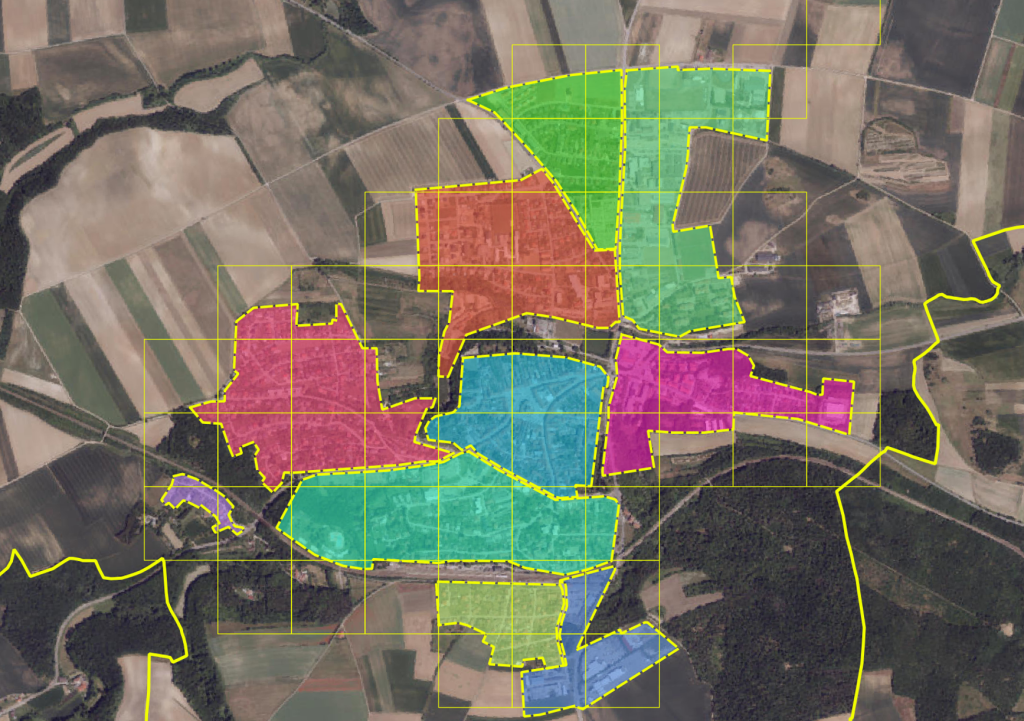
The first part is conceived as a lecture with a duration of about 30 minutes.
You can find the following material in the download section below:
• Presentation slides (English language only)
• Lecture script (English language only)
Alternatively, you can use the pre-recorded video of the lecture.
Unit 2: Spatial dimensions of energy demand
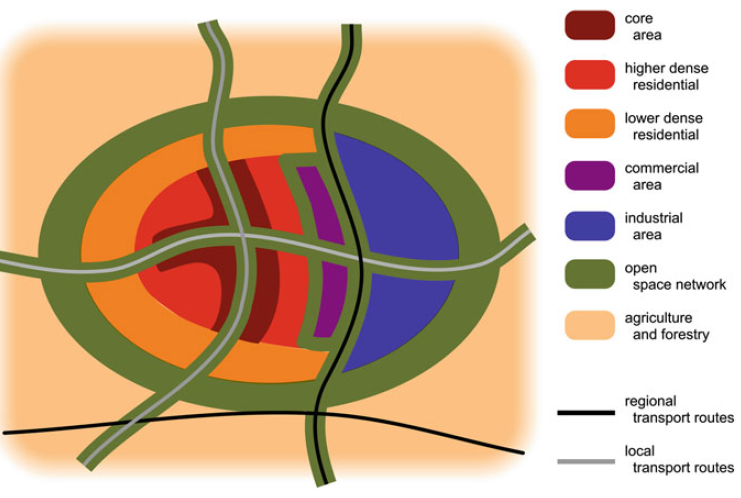
The second part is designed as group work with a time frame proposal of 60 minutes. After a short introduction, four thematic fields are discussed in small groups, which will present their findings on flipcharts to the plenum.
You can find the following material in the download section below:
• Detailed description of unit and support for the facilitator
• Hand-outs for participants
Unit 3: Spatial dimensions of energy supply
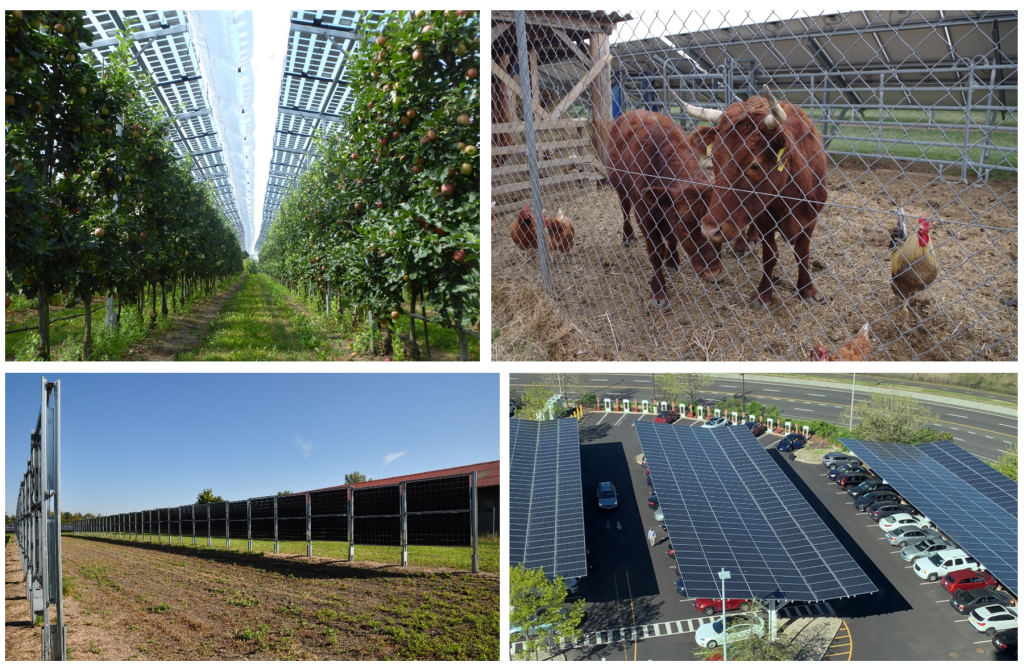
In the final third part, the spatial dimensions of energy supply are presented as a lecture with a duration of about 30 minutes.
You can find the following material in the download section below:
- Presentation slides (English language only)
- Lecture script (English language only)
Alternatively, you can use the pre-recorded video of the lecture.
Further information
Downloads
- Presentation slides of Unit 1 – Introduction and system interrelations
- Lecture script of Unit 1 – Introduction and system interrelations
- Detailed description of Unit 2 – Spatial dimensions of energy demand and support for the facilitator
- Hand-outs for participants of Unit 2 – Spatial dimensions of energy demand
- Presentation slides of Unit 3 – Spatial dimensions of energy supply
- Lecture script of Unit 3 – Spatial dimensions of energy supply
Related literature
Stoeglehner, G, Neugebauer, G, Erker, S, et al. Integrated Spatial and Energy Planning: Supporting Climate Protection and the Energy Turn with Means of Spatial Planning [Internet]. 1st ed. Springer; 2016. 115 pp. Available from: http://www.springer.com/de/book/9783319318684
Stoeglehner G, Abart-Heriszt L. Integrated spatial and energy planning in Styria – A role model for local and regional energy transition and climate protection policies. Renewable & Sustainable Energy Reviews. 2022;165. doi: https://doi.org/10.1016/j.rser.2022.112587
Stoeglehner, G. Integrated spatial and energy planning: a means to reach sustainable development goals. Evolutionary and Institutional Economics Review. 2020;17:1-14. doi: https://doi.org/10.1007/s40844-020-00160-7
Horak D, Hainoun A, Stoeglehner G. Urban energy system modeling as strategic tool for integrated spatial and energy planning: A multi-node, multi-stage optimization approach. Energy Strateg Rev 2025;62:101904. https://doi.org/10.1016/j.esr.2025.101904.