Capacity Building Programme
Module 2 – Integrated Energy Planning
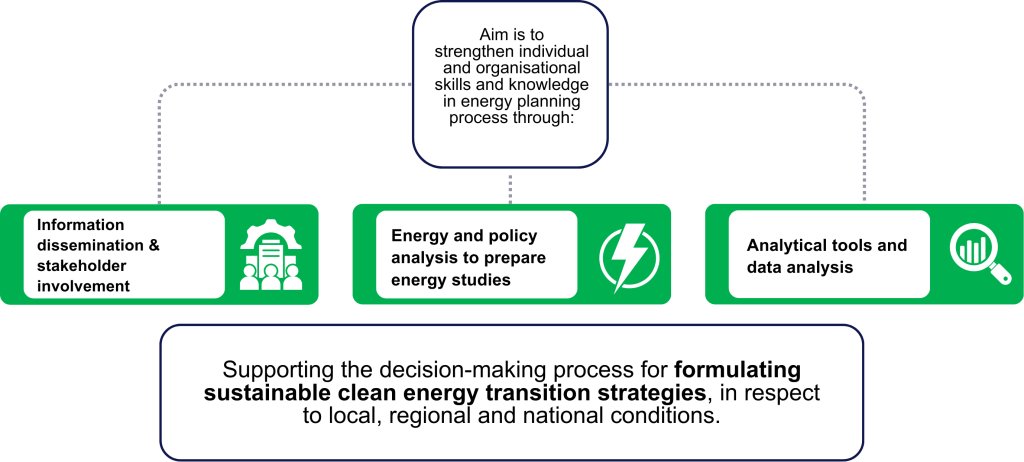
Integrated Energy Planning (IEP) deals with the integrated analysis of energy systems, including energy demand-supply, infrastructure, and policy to deliver sustainable energy strategies consonant with the prevailing socio-economic and technological conditions and the imposed regulatory, financial, and environmental constraints.
Aiming to inform decision-making on the optimal transformation pathway for a secure and sustainable and clean energy future, IEP aligns with the broader societal goals for inclusive development, promoting economic growth, enhancing social inclusion, and mitigating climate change.
Structure and design of the module
The integrated energy planning (IEP) represents module 2 of the PLENTY-Life Capacity Building Programme. It aims to provide local authorities of small and medium-sized cities with dedicated energy planning capacity to deliver sustainable energy plans and strategies for the clean energy transition strategies. Module 2 is devided into five units.
- Unit 1: Introduction to Energy Planning – Introduces the fundamentals of energy systems, including the structure of the energy system from energy sources to energy services. The unit explores the interaction between energy systems and socio-economic development, explains the concept of sustainable energy development, and presents the key steps of integrated energy planning to support informed decision-making.
- Unit 2: Integrated Energy Systems Analysis – Presents the key components of integrated energy demand–supply analysis at different scales (country, region, city) and introduces modelling tools used to assess current energy systems and their future evolution. It elaborates on the interrelation of energy system with the future socio-economic and technological developments, as well as constraints related to energy resources, supply infrastructure, financial conditions, environmental limits, and energy policy frameworks. It also discusses the formulation of sustainable energy strategies and the importance of energy supply security.
- Unit 3: Energy Systems Transformation – Provides insights into the meaning, drivers, and implications of the ongoing clean energy transition. The unit examines the shift from centralized fossil fuel–based energy systems to more distributed, renewable-based systems characterized by intermittency, increased electrification, and a growing need for flexibility options. Particular attention is given to the spatial and temporal characteristics of energy demand and supply.
- Unit 4: Energy and Climate Policy Framework Explains the role of energy and climate policy at national and European levels and its importance in steering energy system development through targets, measures, and corrective actions. The unit introduces key policy instruments, including regulatory, economic, and communication-based approaches, and discusses the Strategic Energy Technology Plan (SET Plan), which provides the framework for European energy technology development.
- Unit 5: Formulation of CET Strategy- (Holistic Integrated Spatio-Temporal Energy Planning) approach through selected city case studies. Participants will gain insights into the process of developing a sustainable clean energy transition strategy, translating strategic objectives into concrete actions and implementation plans at the city level, and establishing monitoring mechanisms to track progress and adapt the strategy in response to evolving urban development.
Material and methods provided for the module
Each of the above units consists of lectures supported by PowerPoint slides, selected videos, and handouts. Each session lasts about one hour and concludes with time for questions and discussion.
“Attendees of the capacity building program can:”
- Understand the fundamentals of energy systems and integrated energy planning in relation to socio-economic development.
- explores urban and regional energy demand–supply analysis using modelling and scenario approaches.
- Identify the key drivers and implications of the clean energy transition, including renewables integration and electrification.
- Interpret EU and national energy and climate policy frameworks relevant for local energy planning.
- Develop Clean Energy Transition (CET) strategies and translate them into concrete sectoral actions.
- Apply KPI-based monitoring frameworks to track progress and support evidence-based decision-making.
- Learn from practical city case studies and replicate good practices in other municipalities.
Unit 1: Introduction to Energy Planning
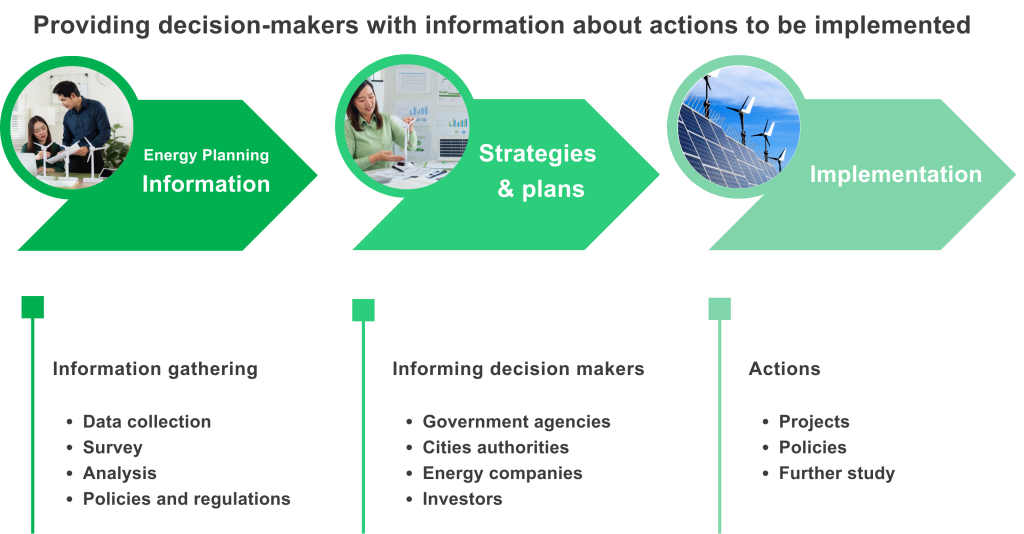
This unit introduces the role of energy systems in socio-economic development and explains the pathway from energy sources to final energy services. It also presents the concept of sustainable energy development, highlights the key implications of energy systems, and outlines the main steps of integrated energy planning to support informed decision-making.
Unit 2: Integrated Energy Systems Analysis
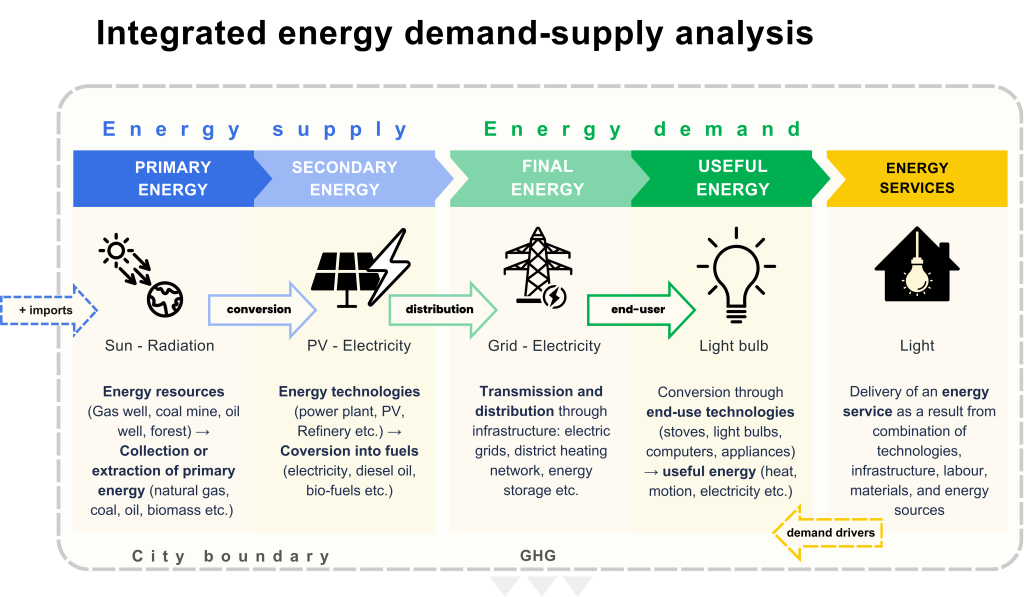
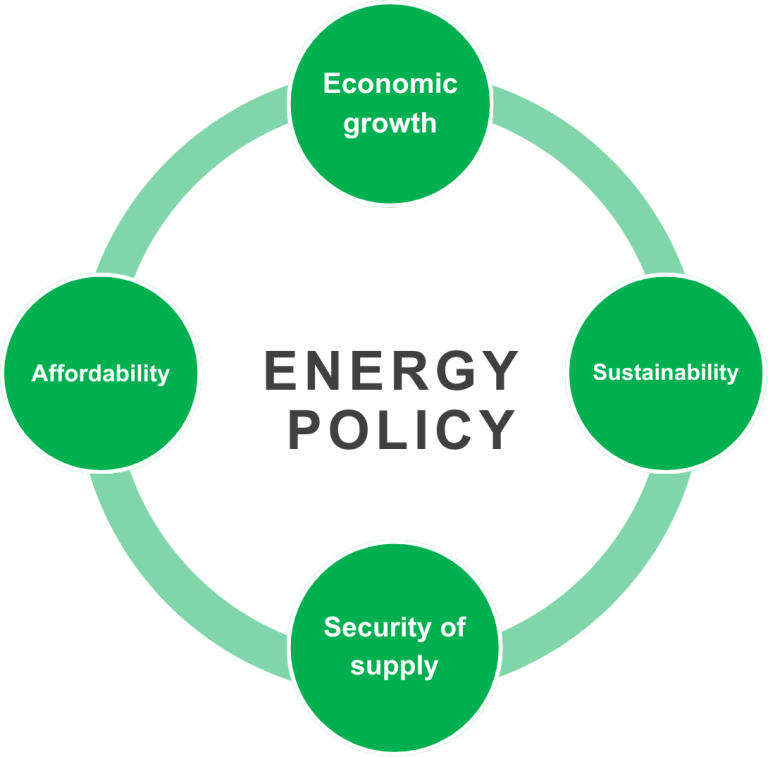
This unit introduces the key elements of energy demand and supply analysis and the use of energy system modelling at national and urban scales to assess current conditions and future developments. It explores the main characteristics of urban energy systems and explains how analytical insights support the formulation of sustainable energy strategies. The unit also addresses the importance of ensuring energy supply security within evolving energy systems.
Unit 3: Clean Energy Transition
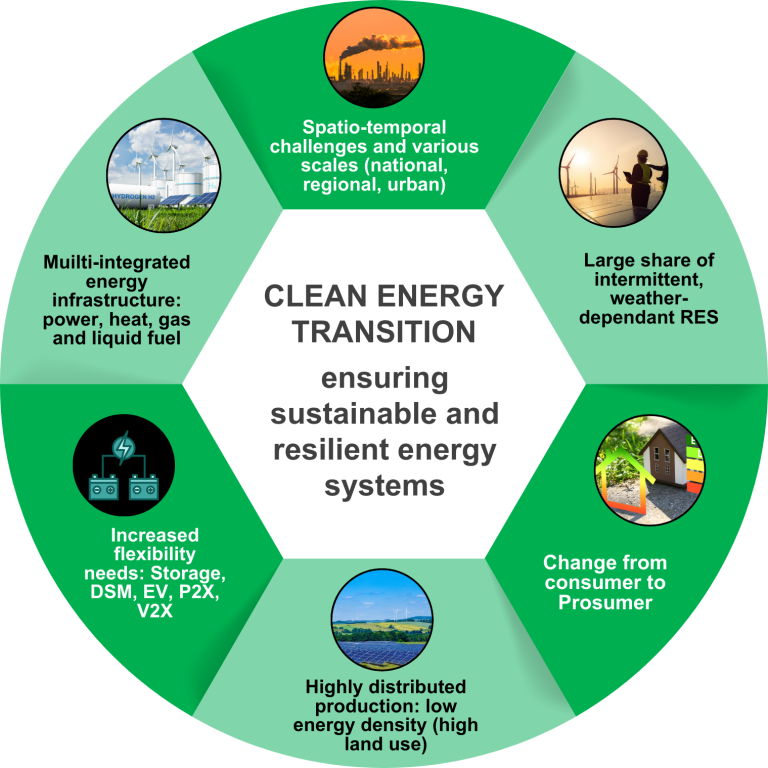
This unit explores the shift from centralized fossil fuel systems to distributed, renewable-based energy systems, highlighting intermittency, electrification, and flexibility needs. It examines spatial and temporal patterns of energy demand and supply, EU initiatives for urban decarbonization, and practical examples from smart city projects like Smarter Together and ASCEND.
Unit 4: Energy and Climate Policy Framework
This unit examines energy policy frameworks and climate targets, focusing on strategies for greenhouse gas (GHG) mitigation. It explores the policy and governance of sustainable energy from a European perspective, including the EU climate and energy framework (2020–2050), key policies on renewable energy and decarbonization, and the Energy Union’s approach to energy governance and supply security. The unit also addresses the implementation of EU energy and climate policies at regional and local levels, highlighting how bottom-up initiatives can influence policy outcomes. Additionally, it covers innovative financing schemes for sustainable energy projects and emerging business models for the clean energy transition
Unit 5: Formulation of CET Strategy
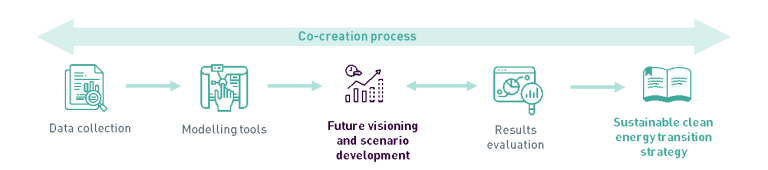
In the fifth unit, the formulation of CET strategy is presented through the demonstration of city case studies covering:
- Participatory process
- Data collection
- Storylines and scenarios construction
- Results evaluation and refinement
- Extraction of action plans and Key indicators for the clean energy transition (KICET)
Further information
For detailed information, please reach out to AIT:
Ali.Hainoun@ait.ac.at, Daniel.Horak@ait.ac.at, Sebastian.Stortecky@ait.ac.at
Related literature
- Horak, D., Hainoun, A., Stoeglehner, G., 2025. Urban energy system modeling as strategic tool for integrated spatial and energy planning: A multi-node, multi-stage optimization approach. Energy Strategy Reviews, Volume 62, 101904. https://doi.org/10.1016/j.esr.2025.101904.
- Arteconi, A., Hewitt, N.J., Polonara, F., 2013. Domestic demand-side management (DSM): Role of heat pumps and thermal energy storage (TES) systems. Appl Therm Eng 51, 155–165. https://doi.org/10.1016/J.APPLTHERMALENG.2012.09.023
- Golmohamadi, H. 2022. Demand-side management in the industrial sector: A review of heavy in-dustries. Renewable and Sustainable Energy Reviews 156, 111963. https://doi.org/10.1016/J.RSER.2021.111963
- Grubler, A., Bai, X., Buettner, T., Dhakal, S., Fisk, D.J., Ichinose, T., Keirstead, J.E., Sammer, G., Satterthwaite, D., Schulz, N.B., Shah, N., Steinberger, J., Weisz, H., 2012. Chapter 18 – Urban Energy Systems, in: Global Energy Assessment – Toward a Sustainable Future. Cambridge University Press, Cambridge, UK and New York, NY, USA and the International Institute for Applied Systems Analysis, Laxenburg, Austria, pp. 1307–1400.
- Hainoun, A., Falay, B., Stortecky, S., Horak, D., Salvado, M., Domingues Goncalves, C., Pereira, M.L., 2025. Formulation of Clean Energy Transition Strategies for Small and Medium Sized Cities, in: REAL CORP 2025. Graz, pp. 527–537.
- Hainoun, A., Loibl, W., 2022. Analysis of the Long-Term Energy Demand of Vienna City and Modelling Related-Key Food-Water-Energy Nexus Effects. Advances in Science, Technology and Innovation 457–462. https://doi.org/10.1007/978-3-030-76081-6_56/COVER
- Horak, D., Hainoun, A., Neugebauer, G., Stoeglehner, G., 2024. Battery electric vehicle energy demand in urban energy system modeling: A stochastic analysis of added flexibility for home charging and battery swapping stations. Sustainable Energy, Grids and Networks 37, 101260. https://doi.org/10.1016/J.SEGAN.2023.101260
- IAEA, 2009. IAEA Tools and Methodologies for Energy System Planning and Nuclear Energy System Assessments.
- IEA, 2024. Energy security in energy transitions, World Energy Outlook 2022 [WWW Document]. https://www.iea.org/reports/world-energy-outlook-2024